
If you feel constantly drained, it’s easy to blame a busy schedule. But being “always tired” can be a signal that something deeper is off.
Urological and hormonal problems — especially low testosterone — plus sleep disruption from nocturia, changes in kidney function, and repeat infections can all lower your energy and act as a persistent symptom.
Many people normalize a slow decline in energy and miss signs that labs or a medical review could help. Hormones interact with sleep, stress, muscle, and motivation, so the effect shows up both physically and mentally.
This guide will help you spot patterns, try simple at-home fixes, know when to seek lab testing, and prepare to talk to a clinician. If your tiredness lasts, Pulse Health Clinic in Cleveland, Tennessee can evaluate symptoms and order targeted testing.
Key Takeaways
- Persistent tiredness often points to an underlying issue, not just lifestyle.
- Hormone shifts, especially low testosterone, are a common and treatable factor.
- Sleep problems, urological issues, and infections can lower energy.
- Recognize warning signs and try simple fixes before seeking tests.
- Pulse Health Clinic in Cleveland, Tennessee can help with evaluation and labs.
When Your “Always Tired” Feeling Becomes Chronic Fatigue
A steady drop in your daily energy should make you pause and track what’s really happening. In practical terms, fatigue means a low capacity to function—persistent exhaustion that slows work, chores, and motivation.
Contrast that with sleepiness: that is the urgent need to doze. Brain fog shows as trouble focusing or remembering. All three can overlap, but each points to a different next step.
How long before you act?
Secondary low energy often lasts one to six months and may follow stress or illness. When symptoms persist beyond six months and rest does not restore you, clinicians call this chronic fatigue.
Track your days and the quality of your sleep. Note whether you wake refreshed or still exhausted. If tiredness drags on, lifestyle fixes come first, but plan medical review when months pass.
- Define: reduced drive, slower thinking, a battery that won’t recharge.
- Timeline: >6 months = key threshold for chronic fatigue.
- Why time matters: longer symptoms raise the chance of an underlying condition.
Signs Your Low Energy Might Be Hormone-Related
Look for clusters of mood, performance, and body shifts—those patterns often point to hormone changes rather than simple tiredness.
Low motivation, unexpected irritability, and mood swings that feel “off” are common early flags. When these feelings persist for weeks and differ from your normal mood, consider a hormonal check.
If you keep training but notice lost muscle and increased body fat, that mismatch is a practical clue. Changes like that suggest your hormone levels might be shifting, not just a change in routine.
Focus and mental clarity
Slower recall, poor concentration, and shorter task stamina often appear alongside physical signs. These cognitive shifts can be mistaken for stress, but their persistence points to a pattern you should track.
- Pattern recognition: symptoms cluster—mood, performance, and body together.
- Don’t assume it’s only depression or anxiety; overlap happens, so avoid self-diagnosis.
- Note your baseline: when did changes start, and what else changed (sleep, stress, training)?
How Low Testosterone Affects Energy, Mood, and Muscle
When testosterone falls, you may lose small edges in energy, recovery, and mental sharpness. This shift is often gradual, so you adapt and accept the new normal.
What testosterone does beyond sex drive
Testosterone supports daily drive. It helps power energy production, preserves muscle, steadies mood, and sharpens focus. Those roles affect how you train, how you bounce back, and how you feel through the day.
Common low T symptoms that often show up gradually
Symptoms usually come together: lower motivation, slower recovery after workouts, reduced muscle gains, and more body fat. You may also notice shorter attention span or mild mood shifts.
Why low T can be missed as “normal aging”
Because the drop is slow, you might blame busy schedules or getting older. But common does not equal optimal. Low testosterone is a medical condition with measurable levels.
Blood testing clarifies levels and guides care. A clinician will weigh your symptoms, labs, and other possible causees before recommending treatment.
fatigue men health causes You Can Fix First at Home
You can often restore steady energy by fixing a few basic lifestyle elements first. Start with simple, measurable changes you can test for 2–3 weeks. Track results so you know what helps.

Sleep basics: quality matters as much as hours
Most adults need 7–9 hours, but timing and depth matter. Go to bed and wake at the same time, limit late caffeine and alcohol, and keep screens off 30–60 minutes before sleep.
Diet gaps and not eating enough calories or nutrients
If you under-eat, especially with heavy training, your recovery and energy drop. Favor whole foods, steady protein, and balanced carbs. Fill obvious nutrient gaps with a multivitamin if a clinician agrees.
Exercise balance: too little vs. too much
Both inactivity and overtraining lower daily drive.
Build consistent, moderate workouts and schedule rest days. If training intensity rose recently, scale back for a couple of weeks and note how you feel.
Hydration and how dehydration can drain energy
Even mild fluid loss causes low energy and headaches. Sip water across the day and replace electrolytes after long workouts or sweating.
Stress load and why it can keep your body “on alert”
Chronic stress disrupts sleep, appetite cues, and recovery. Try short breathing breaks, a walk, or a five-minute wind-down routine each evening.
- Start here checklist: regular sleep schedule, fix obvious diet gaps, balance exercise, hydrate, and reduce stress.
- Test these changes for 2–3 weeks and log outcomes to see which factor moved the needle.
Sleep Problems That Commonly Drive Fatigue in Men
Sleep problems are a top reason your daytime energy slips, even when you log enough hours in bed. Quality matters: repeated interruptions stop deep and REM sleep, which your body uses to repair and reset.
Sleep apnea and why it causes daytime exhaustion
Sleep apnea means brief breathing pauses—often 10+ seconds—many times a night. Each pause lowers oxygen and breaks sleep cycles.
The result is daytime sleepiness, brain fog, and a steady, low-level tiredness that can mimic other disorders. Untreated apnea can be serious, so note loud snoring or gasping at night.
Insomnia and the ripple effect on energy and concentration
Insomnia includes trouble falling asleep or staying asleep. That lost sleep reduces attention, mood stability, and motivation the next day.
Even a few nights of poor sleep can derail training recovery and hormone signaling that support daily drive.
When fragmented sleep is the real issue
You may be in bed eight hours but wake unrefreshed if frequent awakenings cut deep sleep. Watch for morning headaches, waking tired, or daytime nodding off.
- Signs to track: loud snoring, unrefreshed mornings, daytime sleepiness, and morning headaches.
- Improving night rest often improves hormone balance, training recovery, and mood—so fix sleep early to help lower daytime fatigue.
Nighttime Urination and Prostate Issues That Disrupt Sleep
Repeated awakenings to urinate shift sleep stages and can turn a full night in bed into restless, low-reward rest. That pattern quietly lowers your daytime energy, mood, and focus.
Nocturia means waking multiple times to use the bathroom. Each wake resets the sleep cycle, so you lose deep and REM sleep even when total time in bed looks normal.
Nocturia: why repeated wake-ups prevent restorative sleep cycles
Every interruption fragments restorative stages. You may fall back asleep fast, but the brain must restart deep sleep. Over weeks, this pattern can produce chronic tiredness and change how you feel during the day.
Overactive bladder and prostate enlargement connections
Common contributors include an overactive bladder and prostate enlargement. Both can raise nighttime frequency and lead to urgent trips that break sleep continuity.
- Signs to track: urgent night frequency, weak urine stream, a feeling of incomplete emptying.
- Treating the urinary issue often improves sleep quality and reduces daytime fatigue dramatically.
- Track nocturia for a week—note times and volume—to share clear data at your visit.
| Symptom | What it suggests | Next step |
|---|---|---|
| 2+ nightly awakenings | Possible nocturia disrupting deep sleep | Record frequency for 7 days |
| Urgency or strong urge | Overactive bladder likely | Discuss bladder-targeted therapies |
| Weak stream or dribbling | Prostate enlargement may be present | Consider urology evaluation and tests |
Medical Conditions That Mimic Hormone Fatigue
Not every drop in daily drive comes from hormones; several treatable medical conditions can look the same. A brief workup helps you rule in or out common problems instead of guessing for months.
Anemia and low oxygen delivery
Anemia means fewer healthy red blood cells. With less oxygen reaching tissues, you can feel weak, short of breath, or wiped out with routine tasks.
Simple blood tests (CBC, iron studies) identify most cases and point to clear treatments that restore energy.
Thyroid disorders and slowed metabolism
Underactive thyroid slows many body systems. You may notice sluggish thinking, weight shifts, and reduced drive that mirror hormone-related tiredness.
Thyroid panels are fast and guide whether medication or follow-up is needed.
Depression and anxiety as energy drains
Mental health conditions often reduce concentration, sleep quality, and daily motivation. These are real, treatable medical problems—not personal failings.
Prioritize care sooner for severe mood changes, rapid decline, suicidal thoughts, or if you cannot function. Labs and a clinical exam are the fastest way to sort out these overlapping symptoms and find targeted treatment.
Kidney and Urological Health Links to Persistent Fatigue
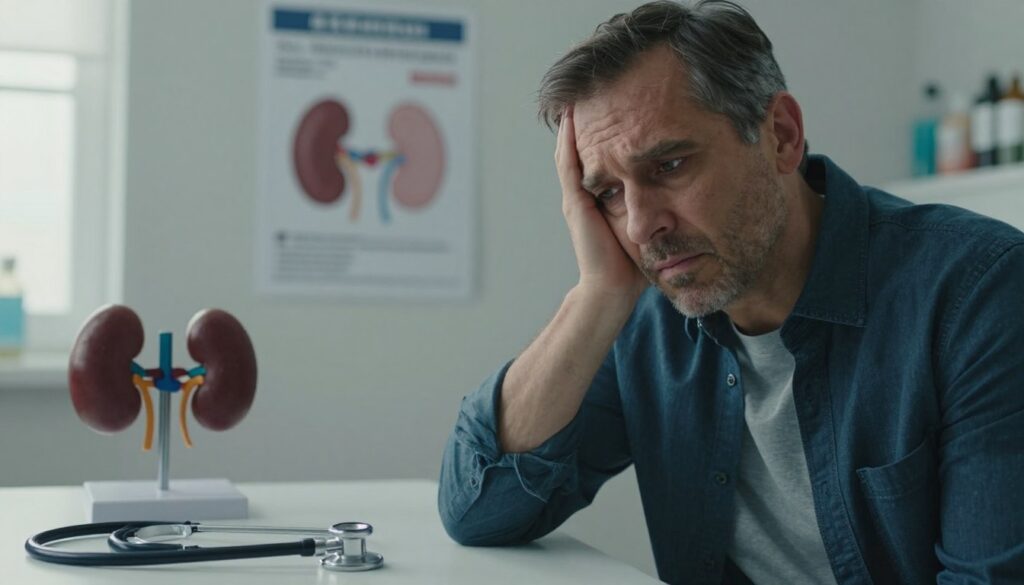
Your kidneys help determine how much energy you have each day. They filter waste, manage fluid balance, and send hormonal signals that affect red blood cell production and overall body function.
How decreased kidney function can lead to toxin buildup and weakness
When filtration falls, metabolic waste can build up in your bloodstream. That buildup often shows as low energy, poor concentration, and a washed-out feeling that does not improve with rest.
Erythropoietin, anemia, and the fatigue feedback loop
Kidneys make erythropoietin, a hormone that tells bone marrow to produce red blood cells. Lower erythropoietin can lead to anemia, which reduces oxygen delivery and deepens tiredness.
This creates a loop: less filtration lowers erythropoietin, anemia worsens energy, and you feel more run down. Treating the root levels often breaks that cycle.
- Noticeable signs to watch: changes in urination patterns, swollen ankles or legs, and persistent back or side pain.
- These clues may point to urological conditions that can cause fatigue and merit testing.
- Early detection protects kidney function and can improve how you feel.
Don’t ignore persistent fatigue paired with urinary changes. Share these symptoms with your clinician so labs and simple tests can find and treat the underlying problem.
Infections, Inflammation, and Pain Conditions That Sap Energy
When your immune system stays active, it can sap energy and make recovery feel incomplete. Immune activation and inflammation use metabolic resources, which explains why you feel ongoing exhaustion during and after infections.
Recurrent urinary tract infections are defined clinically as 2+ infections in six months or 3+ in a year. Repeats can produce a “never fully recovered” loop where low-level symptoms and malaise linger between bouts.
UTIs are less common in the U.S. male population but do occur, especially with urinary flow or prostate issues. If you have repeated infections, seek evaluation to find a root driver.
Chronic pelvic pain and interstitial cystitis
These conditions disrupt sleep and raise your stress response. Pain wakes you at night, which makes sleep shallower. Poor sleep then amplifies pain sensitivity and daily exhaustion.
- Track number and timing of infections, triggers, and how long symptoms last.
- Note sleep disruption, pain patterns, and activities that make symptoms worse.
- Bring this log to your clinician to speed diagnosis and guide tests.
| Problem | What it does | Action |
|---|---|---|
| Recurrent UTI | Creates persistent malaise and low energy | Document frequency and get urology review |
| Chronic pelvic pain | Breaks sleep and raises stress | Consider pain specialist and sleep strategies |
| Ongoing inflammation | Consumes metabolic resources | Treat infection/inflammation to restore energy |
Treating the underlying infection, inflammation, or pain often restores sleep continuity and lowers stress. That path usually returns your energy and reduces chronic fatigue over time.
Clues in Your Symptoms That Point Toward Hormone Testing
Unexplained dips in stamina and slower recovery can point to shifts worth testing for. Watch how your daily energy and exercise responses change over weeks. That pattern, more than an isolated bad day, guides next steps.
Energy crashes, reduced performance, and reduced recovery
Look for a consistent drop in how long you can train and how long you need to recover. You may hit a wall earlier and bounce back slowly after hard sessions.
Sex drive and erectile changes that can accompany low T
Lower libido or new erectile difficulties often appear with low testosterone. These shifts commonly come with mood and brain fog, so mention them openly to your clinician.
What to track for a few weeks before your visit
- Sleep duration and morning energy level.
- Workout intensity, volume, and recovery time.
- Daily mood, libido, body weight/waist, and nocturia frequency.
Why tracking matters: blood testing interprets your lab values alongside real symptoms, not alone. A concise symptom timeline speeds diagnosis and helps you and your clinician decide if hormone testing is appropriate now.
| Clue | What it suggests | Practical next step |
|---|---|---|
| Earlier workout fatigue | Possible low testosterone or overtraining | Log sessions; consider initial labs |
| Slower recovery | Hormone shift or inadequate sleep | Track sleep and rest, share with clinician |
| Reduced libido/erectile change | Often linked to low T | Note timing and seek testing |
| Worsening mood or brain fog | Supports hormone review | Bring symptom timeline to appointment |
How to Talk to Your Doctor About Chronic Fatigue and Get the Right Labs
A focused description of symptoms helps your doctor prioritize what tests to order first. Start with a short timeline: when the low energy began, how it progressed, and what limits your day now.
Before the visit, list sleep patterns, exercise changes, and any medicines or supplements you take. Bring a week of notes on sleep, nocturia, and workout recovery so the clinician sees patterns, not isolated days.
What a basic workup often includes
Your clinician will screen for common, treatable problems first. Typical testing checks for anemia and thyroid disorders, basic metabolic panels, and a review of medications that could lower energy.
Testosterone testing and interpreting results
Testosterone is measured by blood. A single lab value is not the whole story—your doctor will compare numbers to your symptoms and overall function to decide if levels are suboptimal.
When sleep studies may be part of the plan
If you snore, wake unrefreshed, or have daytime sleepiness, a sleep study may be recommended to look for sleep apnea. Treating disrupted sleep often improves daytime energy more than guessing at other fixes.
- Describe what it feels like, when it started, and what makes it better or worse.
- Bring tracking notes and a current medication/supplement list.
- If symptoms have lasted months, ask for a stepwise diagnostic approach rather than trying random remedies.
| Focus | Why | Typical next step |
|---|---|---|
| Low hemoglobin | Suggests anemia | CBC and iron studies |
| Slow thinking, weight change | May indicate thyroid disorders | TSH and free T4 testing |
| Loud snoring, unrefreshed sleep | Possible sleep apnea | Home or lab sleep study |
What Treatment Can Look Like When Hormones Are the Cause
Matching treatment to the root hormonal issue gives you the best chance to recover energy and drive. First, testing and a clear symptom timeline guide which therapies will help most.
Lifestyle changes that support healthier hormone levels
Daily habits matter. Build a regular sleep schedule, balance resistance training with rest, and eat enough calories with steady protein.
- Sleep: consistent bed and wake times to support recovery.
- Nutrition: adequate calories and protein for muscle and hormone synthesis.
- Stress: short daily breaks, breathing, or walk breaks to lower cortisol.
Testosterone replacement basics and individualized planning
When labs show low levels, therapy can be offered under clinician oversight. Plans are individualized, starting low, tracking symptoms and labs, and adjusting as needed.
Addressing sleep apnea, anemia, or thyroid problems in parallel
Treating coexisting conditions often improves outcomes faster than hormone therapy alone. CPAP for sleep apnea, iron or anemia workups, and thyroid correction all support recovery.
Set realistic expectations: morning energy and mood often improve first, followed by better training recovery and body composition over months. Always pursue testing, guided therapy, and follow-up rather than self-medicating.
Conclusion
When tiredness lasts for months, a targeted check often finds something treatable. Start with solid basics: sleep quality, balanced diet, hydration, sensible exercise, and stress control.
If low energy persists beyond six months, think in terms of chronic fatigue and pursue a stepwise evaluation. Rule out common mimics such as anemia, thyroid problems, depression or anxiety, infections, and kidney or urologic issues.
Low testosterone can look like normal aging but affects mood, muscle, and daily drive. Track specific limits in workouts and daily activities so your clinician can match tests to your experience.
If you are in or near Cleveland, Tennessee, Pulse Health Clinic can evaluate symptoms and build a plan. To take the next step, scheule an appointment with Pulse Health Clinicy.